

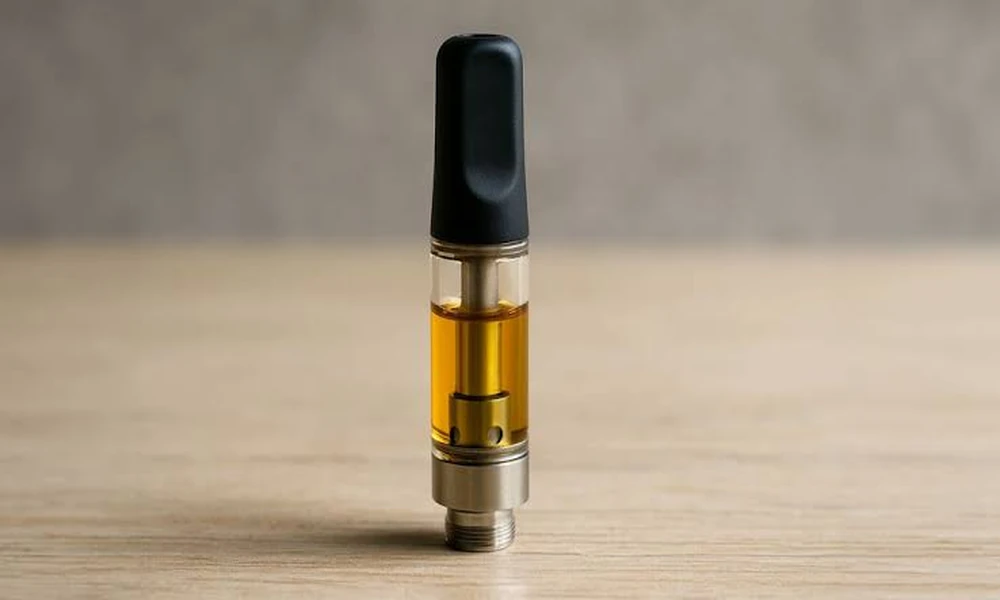
Most people assume vaporizing and smoking are close enough that the difference barely matters. That assumption does not hold once you look at what each method actually does during use. THC vaporizers operate on a controlled heat principle that smoking cannot replicate, and the gap between the two formats shows up in the delivery process, what accompanies the cannabinoids during inhalation, and what the equipment requires afterwards.
Heat mechanism differences
THC vaporizers bring oil to a specific temperature range where active compounds convert into vapor. No flame. No burning. The material never reaches the ignition point, which means the process stops at vaporisation rather than continuing into combustion.
Smoking does not work that way. A flame applied to plant material sends the temperature far past what any cannabinoid needs to activate. Everything that burns produces byproducts, and those byproducts travel into the inhale alongside the cannabinoids, whether the consumer wants them or not. Vaporisers sidestep that entirely by keeping heat within a range where conversion happens without ignition. The vapour that comes out of a properly functioning device carries active compounds from the oil without the accompanying material that burning plant matter produces. That is the core difference, and it comes entirely from which heat source is being used rather than anything else about the two formats.
Onset and delivery
Both formats use the pulmonary pathway, so the speed at which cannabinoids reach the bloodstream is roughly comparable across the two.
What differs is the composition of what travels through that pathway during each inhale.Smoke carries combustion byproducts that take up space in every draw without adding to cannabinoid delivery. Vapour produced at a controlled temperature does not carry that load. The proportion of active cannabinoid relative to total inhaled volume is higher in vapour than in smoke, which means the same draw size delivers more compound through a vaporiser than through combustion.
How that difference plays out in practice varies. Tolerance level, oil concentration, and inhalation technique all shift the outcome individually. Two consumers using the same device with the same oil can have a noticeably different experience from each other, so the comparison between formats is never a straight line across all users.
Temperature control
Combustion gives the consumer no control over what temperature the material reaches. A flame produces whatever heat it produces, and the cannabinoids and terpenes present in the material respond to that heat, whether it suits them or not. Vaporisers work differently – temperature is a setting, not a byproduct of the ignition process.
- Lower heat preserves terpene compounds that burn off entirely under flame, producing lighter vapour with more flavour presence per draw.
- Mid-range settings activate a broader portion of the cannabinoid profile while retaining some terpene character from the oil.
- Higher settings within the vaporisation range push vapour density up and increase cannabinoid concentration without crossing into combustion.
- Stable temperature output across a full draw keeps the cannabinoid profile consistent from the start of the inhale through to the end, rather than fluctuating as heat builds or drops mid-session.
Two formats share a delivery pathway and not much else. What the heat source does, what travels through the inhale, how much control the consumer has over the process, and what the equipment needs all point in different directions afterwards, depending on which format is being used.
