

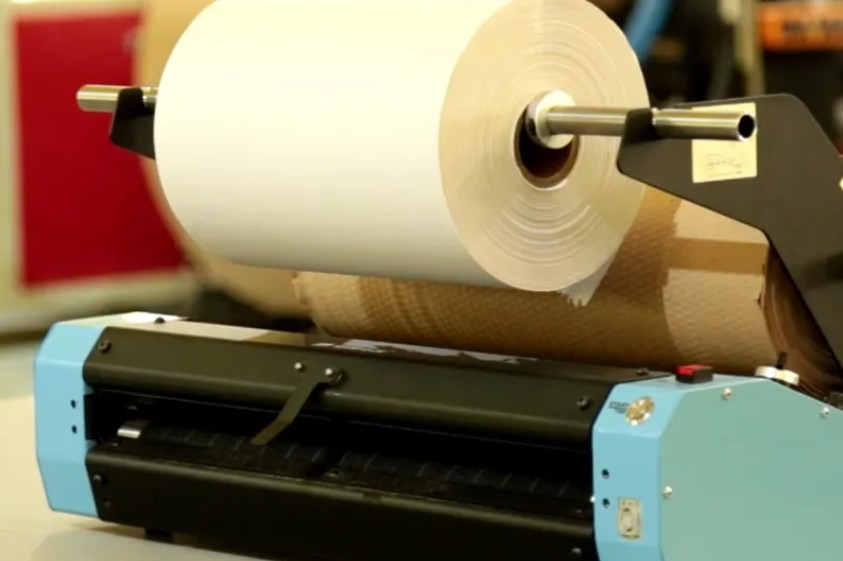
Warehouses rarely stay quiet for long. Boxes move along conveyors, workers scan barcodes, forklifts glide through aisles, and packing stations operate at a constant rhythm. Amid all this motion, packaging efficiency becomes the silent factor determining whether orders move quickly or bottleneck at the last step. A Paper cushion machine has gradually become a key tool in solving that problem. By transforming flat kraft paper into protective cushioning material on demand, a Paper cushion machine helps modern warehouses pack products faster, reduce material waste, and maintain a steady flow of shipments even during peak order surges.
Traditional packaging methods often rely on pre-formed materials such as foam peanuts, bubble wrap, or plastic air pillows. These materials take up significant storage space and require frequent restocking. A Paper cushion machine changes this equation completely. Instead of storing bulky protective materials, warehouses can simply load rolls of kraft paper into a Paper cushion machine and produce cushioning exactly when it is needed. This shift toward on-demand packaging is one reason the Paper cushion machine has gained popularity in logistics operations worldwide.
Paper Cushion Machine and the Shift Toward On-Demand Packaging
Warehouse efficiency depends heavily on how quickly packing stations can prepare parcels for shipment. A Paper cushion machine supports this process by producing protective paper cushioning instantly at the packing line. Instead of workers reaching for multiple packaging materials, the Paper cushion machine delivers a continuous stream of protective paper that can be cut to the exact length required.
Using a Paper cushion machine also reduces the clutter typically found at packaging stations. Traditional materials such as foam or bubble wrap often require large bins or racks for storage. With a Paper cushion machine, the only required supply is a roll of paper. The Paper cushion machine converts that roll into structured cushioning with folds and layers that absorb shock during transportation.
Another advantage of a Paper cushion machine is its consistency. Workers do not have to guess how much cushioning is needed for each box. A Paper cushion machine produces uniform paper pads that can be layered inside cartons to secure fragile items. This uniformity helps improve packaging reliability and reduces the likelihood of damage during shipping.
Faster Packing Workflows with Paper Cushion Machine Technology
Time is a critical metric in modern warehouses. Every extra second spent packing a box can accumulate into hours of lost productivity over the course of a day. A Paper cushion machine accelerates the packing workflow by simplifying how cushioning material is created and applied.
Workers using a Paper cushion machine can generate protective paper with a simple foot pedal or button. The Paper cushion machine feeds, folds, and crumples paper automatically, producing a sturdy paper pad ready for immediate use. This automation eliminates manual crumpling or cutting, which slows down the packing process.
The presence of a Paper cushion machine at packing stations also reduces worker fatigue. Repetitive tasks like tearing or shaping packaging materials can be physically tiring. With a Paper cushion machine performing these tasks, workers can focus on arranging products securely inside boxes rather than preparing cushioning manually.
Another benefit of a Paper cushion machine is its adaptability to various product sizes. Whether shipping small electronics or large household goods, a Paper cushion machine allows workers to create cushioning of any length. This flexibility supports faster decision-making during packing and helps maintain a consistent workflow.
Reducing Material Waste with Paper Cushion Machine Systems
Material waste is an ongoing challenge in warehouse packaging operations. Excess packaging not only increases operational costs but also creates unnecessary environmental impact. A Paper cushion machine helps address both concerns by generating cushioning material only when required.
Unlike plastic packaging materials that come in pre-set sizes, a Paper cushion machine produces custom lengths of cushioning paper. Workers simply run the Paper cushion machine until the desired amount is produced. This precision significantly reduces leftover material that would otherwise be discarded.
The paper used in a Paper cushion machine is typically recyclable kraft paper. Because of this, packaging created by a Paper cushion machine aligns with sustainability goals adopted by many modern logistics companies. Businesses can maintain product protection while also reducing reliance on plastic packaging materials.
Another important point is storage efficiency. Plastic air pillows and foam materials occupy large storage areas before they are used. A Paper cushion machine relies on compact paper rolls, which take up far less space. This allows warehouses to free up valuable storage zones for inventory rather than packaging supplies.
Improving Warehouse Organization Through Paper Cushion Machine Integration
Organization plays a significant role in warehouse productivity. When packaging materials are scattered across packing stations, workers spend unnecessary time searching for the right supplies. A Paper cushion machine simplifies material management by centralizing cushioning production.
A typical packing station equipped with a Paper cushion machine requires only the machine itself and a paper roll. The Paper cushion machine continuously produces protective pads that can be placed directly into cartons. This streamlined setup reduces clutter and creates a cleaner working environment.
Another organizational advantage of a Paper cushion machine is predictable supply management. Instead of monitoring multiple packaging materials, warehouse managers only need to track paper roll inventory for the Paper cushion machine. This simplifies procurement and reduces the risk of running out of critical packaging supplies during busy periods.
Additionally, integrating a Paper cushion machine into automated packing lines can further improve operational organization. Many Paper cushion machine models can be mounted on packing tables or connected to conveyor systems. These installations ensure that cushioning material flows seamlessly alongside the packaging process.
Paper Cushion Machine and Worker Productivity
Worker productivity is often influenced by the tools available at the packing station. A Paper cushion machine enhances productivity by reducing the number of manual steps required to prepare a shipment.
When workers rely on traditional materials, they may need to cut bubble wrap, open bags of foam peanuts, or inflate air pillows. Each of these steps interrupts the packing rhythm. A Paper cushion machine eliminates these interruptions by providing cushioning instantly.
Another productivity benefit of a Paper cushion machine lies in its intuitive operation. Most Paper cushion machine systems are designed with simple controls that require minimal training. Workers can quickly learn how to operate the Paper cushion machine and integrate it into their packing routine.
Consistency also improves productivity. Because a Paper cushion machine produces uniform cushioning pads, workers can develop standardized packing methods. This standardization leads to faster packing speeds and fewer packaging errors.
Sustainable Packaging Trends and Paper Cushion Machine Solutions
Sustainability has become a major priority across supply chains, and packaging materials are under increasing scrutiny. A Paper cushion machine supports environmentally responsible packaging practices by replacing plastic fillers with recyclable paper cushioning.
Many companies are transitioning to eco-friendly packaging because customers increasingly prefer sustainable shipping materials. A Paper cushion machine enables warehouses to meet this expectation without sacrificing packaging performance. The paper pads created by a Paper cushion machine provide strong shock absorption while remaining fully recyclable.
Another sustainability advantage of a Paper cushion machine is reduced packaging waste at the customer’s end. Recipients can easily recycle the cushioning paper produced by a Paper cushion machine along with standard paper products. This contrasts with foam or plastic fillers that often end up in landfills.
Logistics companies also benefit from improved brand perception when using a Paper cushion machine. Sustainable packaging practices signal environmental responsibility, which can strengthen customer loyalty and corporate reputation.
Scalability Benefits of Paper Cushion Machine Deployment
Warehouse operations often experience fluctuating order volumes, particularly during seasonal sales or promotional campaigns. A Paper cushion machine offers the scalability needed to handle these variations efficiently.
When order volumes increase, workers can simply operate the Paper cushion machine more frequently to generate additional cushioning material. There is no need to reorder large quantities of pre-formed packaging materials in advance. This flexibility helps warehouses adapt quickly to sudden spikes in shipping demand.
A Paper cushion machine can also support multiple packing stations within a warehouse. Some facilities install several Paper cushion machine units across different packing areas to ensure that every station has access to cushioning material. This distributed setup maintains a consistent packing pace even during peak operations.
Maintenance requirements for a Paper cushion machine are typically minimal. With proper care and periodic servicing, a Paper cushion machine can operate reliably for long periods. This reliability ensures that packaging processes remain stable even under heavy workloads.
Why Modern Warehouses Continue Adopting Paper Cushion Machine Systems
Logistics technology evolves rapidly, yet the Paper cushion machine has secured a lasting place in warehouse packaging operations. Its ability to produce protective material on demand, streamline packing workflows, and reduce environmental impact makes it highly valuable in modern supply chains.
Warehouses that implement a Paper cushion machine often notice improvements not only in packing speed but also in overall operational efficiency. Workers spend less time managing packaging materials and more time focusing on accurate order fulfillment. At the same time, the Paper cushion machine helps reduce packaging costs by minimizing waste and storage requirements.
As e-commerce continues expanding, the number of parcels shipped every day will only increase. Tools that simplify and accelerate packaging processes will therefore become even more essential. A Paper cushion machine provides a practical solution for warehouses seeking to maintain efficiency while meeting the growing demands of global shipping networks.
Packaging might appear to be a small step in the logistics chain, yet it determines whether products arrive safely and on time. With the help of a Paper cushion machine, warehouses can transform packaging from a slow, manual task into a streamlined and efficient process that keeps goods moving smoothly from shelf to customer doorstep.
