

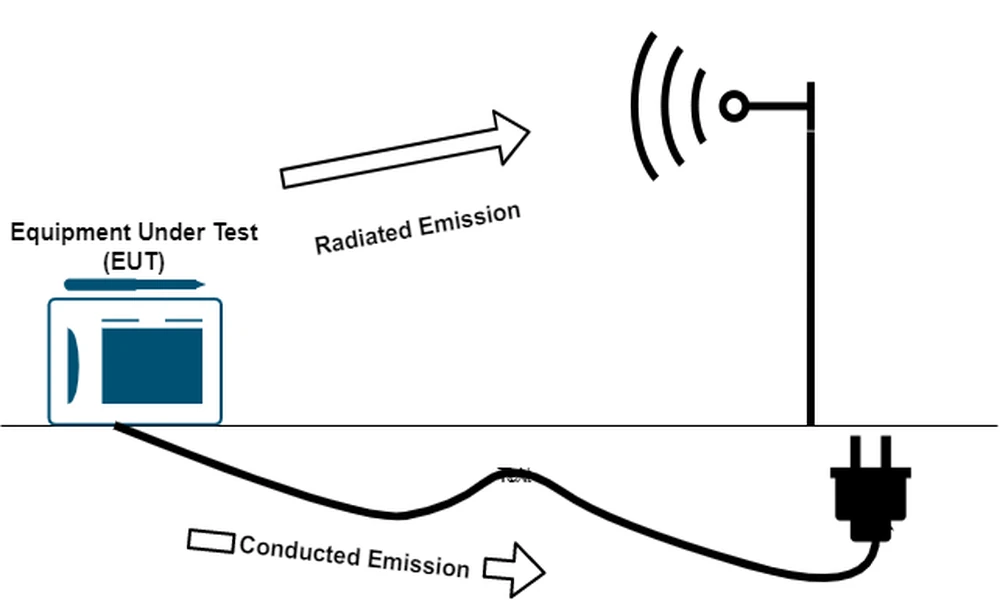
For any company designing electronics, electromagnetic compatibility (EMC) testing can make or break global market access. Yet even seasoned engineers sometimes confuse two of EMC’s foundational concepts: radiated emissions and conducted emissions. Understanding their differences is not just about passing certification, it is about product reliability in a noisy world.
Radiated vs. Conducted Emissions: Clearing Up the Basics
Electronics can inadvertently generate electromagnetic energy that escapes their circuitry. But how this energy leaves the device changes everything about how it is measured and controlled.
What Radiated Emissions Actually Measure
Radiated emissions are the electromagnetic fields released directly into the air from a device or its cables. Think of the whine your radio picks up when you place a smartphone nearby. Testing for radiated emissions answers the question: How much does your product leak energy that could interfere with surrounding equipment? This process uses antennas and shielded chambers, capturing emissions across a broad range of frequencies.
What Conducted Emissions Really Involve
Conducted emissions, on the other hand, are unwanted signals that travel along power lines or signal cables. Rather than broadcasting through the air, these disturbances hitch a ride through wires, potentially contaminating other connected devices or the electrical grid. Measurement involves specialized filters and equipment to separate these signals from intentional currents.
Myth 1: Radiated and Conducted Emissions Are Just Two Sides of the Same Coin
At first glance, it is tempting to treat radiated and conducted emissions as interchangeable. Both focus on electromagnetic energy, both require regulatory compliance. But their sources and measurement environments set them apart.
Why Their Sources and Measurement Environments Differ
Radiated emissions can originate from internal circuit traces, connectors, or even the physical packaging of a device. Conducted emissions trace back to switching power supplies, clock signals, or abrupt changes in current flow within the circuitry. As a result, radiated testing demands shielded rooms and antennas, while conducted testing needs line impedance stabilization networks (LISNs) and spectrum analyzers.
Impact on Testing Procedures and Equipment
Test environments shift: radiated emissions require large open-area test sites or chambers, whereas conducted emissions are measured right at the power input, often with the device powered by specialized test setups.
Myth 2: Both Tests Use Identical Regulatory Standards
Assuming that a single set of rules applies to both tests is a recipe for non-compliance.
Overview of Radiated Emissions Standards (FCC, CISPR, etc.)
Radiated emissions testing follows standards like FCC Part 15 (United States) or CISPR 32 (international multimedia equipment). These regulations specify frequency ranges and permissible field strengths, often tailored to product category or intended market.
Overview of Conducted Emissions Standards and How They Diverge
Conducted emissions face their own set of standards, such as EN 55032 for multimedia equipment or CISPR 11 for industrial, scientific, and medical devices. Allowable limits and required test setups differ, sometimes dramatically.
Myth 3: Pass in One Emissions Test Means Pass in the Other
It is a costly misconception to believe that success in radiated tests guarantees a pass in conducted tests (or vice versa).
How Device Behavior Differs in Signal Radiation vs. Conduction
A device might emit little energy through the air but transmit significant noise over its power lines. Conversely, robust line filtering could minimize conducted emissions, yet poor shielding may allow high radiated leakage.
Real-World Compliance Risks When Overlooking One Test
Products that skip either test can disrupt other equipment or fail field compliance, leading to recalls or banned imports.
Myth 4: Radiated Emissions Testing Is Always More Expensive and Complex
The stereotype that radiated testing is always tougher is not universally true.
Cost and Complexity Factors for Radiated vs. Conducted Testing
Radiated tests do require larger facilities and sometimes more time. Yet, conducted emissions tests can involve multiple cable configurations, different power setups, and repeat measurements at various frequencies, all of which add up.
Situations Where Conducted Emissions Testing May Be More Demanding
Devices with multiple power domains or complex wiring harnesses can turn conducted testing into a logistical puzzle, sometimes eclipsing the challenges of radiated testing.
Myth 5: Conducted Emissions Only Matter for Wired Devices
Wireless devices are not automatically exempt from conducted testing.
Why Wireless and Hybrid Devices Also Need Conducted Emissions Testing
Even battery-powered or hybrid wireless devices can couple noise onto accessory ports or charging lines. Regulatory bodies increasingly require conducted tests for any equipment that connects to wired networks or power.
Examples of Overlooked Emissions Pathways
USB charging, Ethernet ports, or audio cables often serve as hidden routes for conducted emissions, sometimes surprising product teams late in development.
Myth 6: Emissions Testing Is Only About Passing Certification
True EMC strategy looks beyond the certificate on the wall.
The Role of Emissions Testing in Product Reliability and Market Access
Passing emissions testing is essential, but consistently meeting these standards in real-world environments also ensures fewer product failures and complaints. In addition, global certifications open doors to key markets, providing a tangible business advantage.
How Early Testing Can Save Time and Costs
Early engagement with a lab like Stancer Testing-Lab EMC testing offers guidance, pre-compliance assessments, and custom strategies. Catching issues sooner means less rework and smoother product launches.
Choosing the Right Testing Strategy
Not all products require the same testing priorities.
When to Prioritize Radiated Emissions Testing
Devices with wireless functions, high-speed digital interfaces, or exposed cabling often warrant early radiated emissions focus.
When Conducted Emissions Testing Takes Precedence
Products that plug directly into AC mains or interface heavily with wired networks need thorough conducted emissions checks to prevent failures at certification.
Coordinating Both for Comprehensive EMC Compliance
Ultimately, the most resilient products anticipate both radiated and conducted emissions challenges. Seamless integration of both testing types ensures not only regulatory compliance but also robust performance, and a smoother path to market entry.
